The FBI estimates cargo theft losses in the United States and Canada reached nearly $725 million in 2025, a 60 percent increase from 2024, and the growth engine is not the crowbar. It is the phishing email: criminals impersonate legitimate brokers and carriers, reroute shipments on paper, and collect freight that was handed over voluntarily. For warehouse operators on the Texas Triangle corridors, cargo theft now starts in the inbox.
What the FBI is actually warning about
Summarizing the FBI's IC3 public service announcement, the Bureau's Philadelphia field office reported the near $725 million estimate for 2025, with confirmed incidents up 18 percent. Criminal actors use phishing emails, spoofed websites, compromised business accounts, and fraudulent load postings to impersonate brokers and carriers and reroute shipments.
The FBI separates cargo theft into straight theft, strategic theft by fraud and deception, cyber enabled theft, and pilferage. The strategic category is the one rewriting warehouse risk, because the gate did nothing wrong by its own lights. The paperwork said release the load. The paperwork was the crime.
Dual control: the gate and the office, checking each other
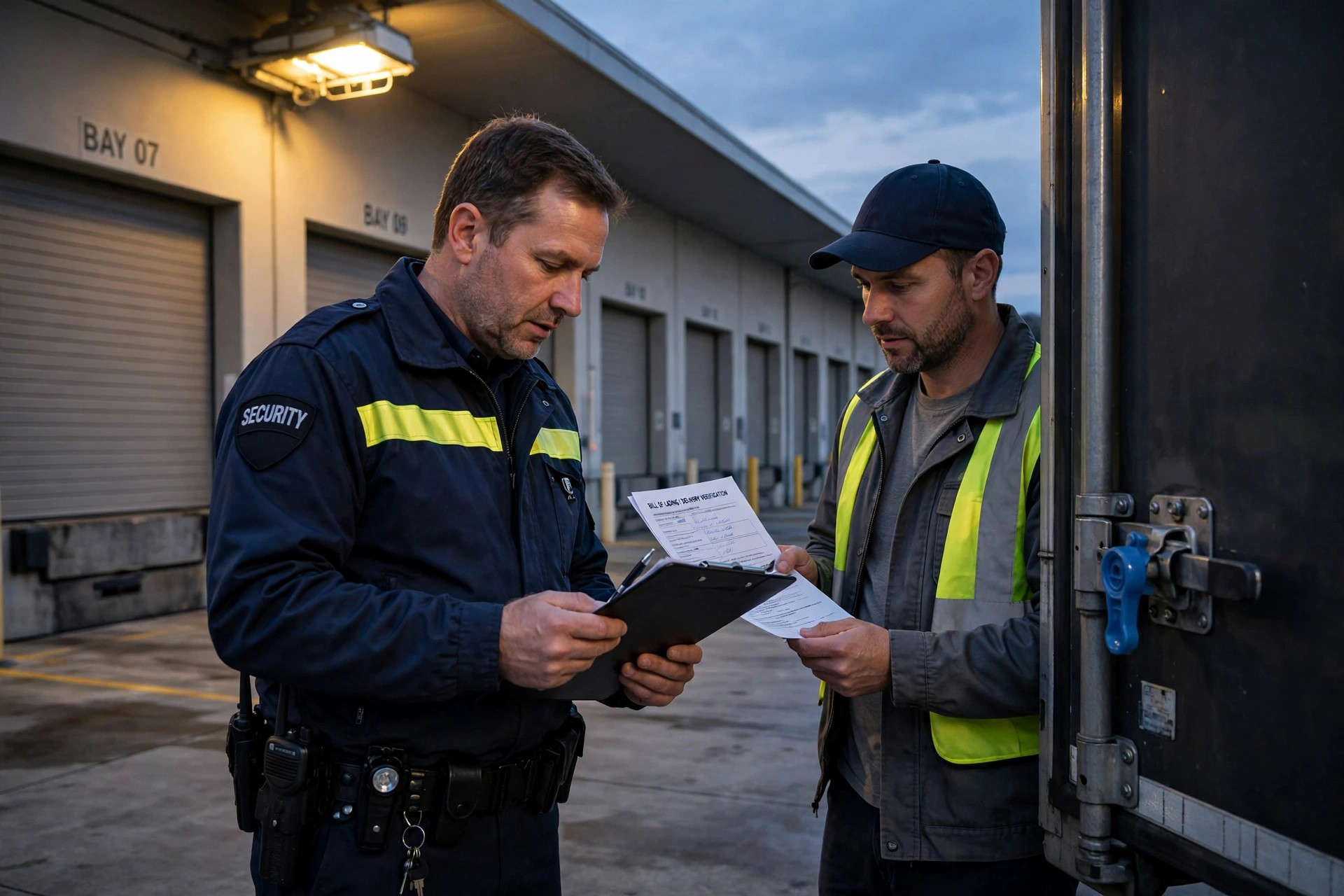
The FBI's business guidance is consistent: independently verify shipment and pickup details through trusted channels, vet carriers and brokers, use multi-factor authentication, and keep detailed shipment, driver, vehicle, and delivery records. Translated into post orders for warehouse gate and yard security, that becomes dual control:
- Gate side: driver ID, carrier name, load number, and trailer seal verified on every pickup, logged in writing, no exceptions.
- Office side: any change to carrier, pickup time, or destination confirmed through a trusted channel, a known phone number or portal, never from the email that announced the change.
- The urgent change rule: urgency is the attacker's tool. A last minute reroute gets more verification, not less, even when the dock is busy.
- The pickup log: seal numbers, times, plate numbers, and the name of who authorized release, kept and reviewable.
The office half of this control is a cybersecurity discipline, which is why our phishing and account-compromise prevention for logistics work sits beside the gate post, and why the vendor access failures in the PowerSchool case should sound familiar to any logistics manager.
Not sure where your property stands? Take the free security assessment from Nationwide Security and see your gaps in plain language. Take the assessment, then book a 20 minute call at 1-800-294-5558.
Why Texas Triangle operators carry extra exposure
Dallas Fort Worth, Houston, and San Antonio sit on the I-35, I-45, and I-10 freight web, with Laredo handling border volume at national scale. Volume is opportunity, for the industry and for the impersonators. A warehouse that runs dual control, and can show the log, is also a better insurance and customer story: shippers increasingly audit the pickup process, not just the fence line.
The fence still matters. The gate now matters more, because the email arrives before the truck does.
Frequently Asked Questions
How much cargo theft loss did the FBI estimate for 2025?
Nearly $725 million in the United States and Canada, a 60 percent increase from 2024, with confirmed incidents up 18 percent, per the FBI's summary of its IC3 public service announcement.
How does a phishing email steal a physical load?
Criminals impersonate legitimate brokers or carriers using phishing, spoofed sites, compromised accounts, and fake load postings, then reroute the shipment on paper so the warehouse releases freight to the wrong party voluntarily.
What is the single most effective gate control?
Independent verification through a trusted channel: driver, carrier, load, and seal checked against confirmation obtained from a known number or portal, with every change re-verified and every pickup logged.
Take the free security assessment from Nationwide Security today. It takes a few minutes, it shows exactly where you are exposed, and it gives you the checklist before an incident, an insurer, or a regulator asks for it. Take the assessment, then book a 20 minute call at 1-800-294-5558 and we will walk your results with you, line by line.